The essentials: the Ocracoke pony pen sits on NC-12 about seven miles north of the village. It's free, open year-round, and has a parking pull-off and an observation platform. The National Park Service keeps the herd — around fifteen ponies — and rotates some up to the front pasture so there's always something to see.
Where to see them
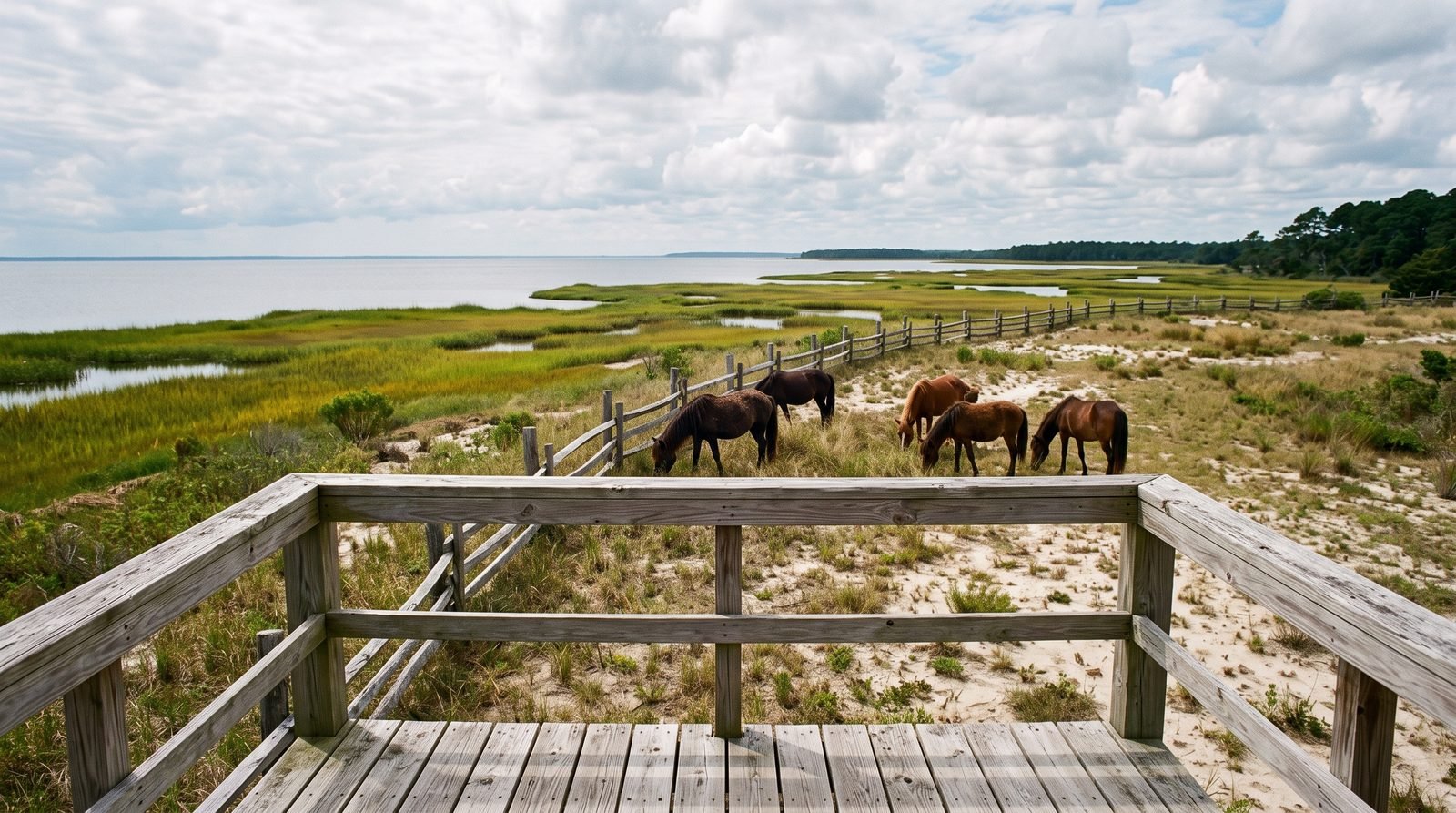
The pen is impossible to miss: a soundside pasture right off the highway, with parking beside it and a wooden platform looking out over the enclosure. The ponies range across 188 acres of beach and salt marsh, but they tend to stay near the paddocks — especially around feeding time — and the Park Service rotates ponies to the pasture nearest the platform so a visit is never a bust.
Two rules, both serious: don't feed them, and don't reach over the fence. They look gentle. They are not tame, and they bite and kick like anything that's spent three hundred years looking after itself. Donations at the pen are welcomed — they go to feed and veterinary care.
Shipwreck stock
Nobody can produce the paperwork for how horses got to a barrier island with no bridge, and that's half the charm. The story the island tells — and plenty of historians find plausible — is Spanish stock come ashore from a wreck, or pushed overboard to lighten a grounded ship, centuries ago. What's certain is that they've been here a very long time: Banker ponies once roamed Ocracoke freely by the hundreds, foraging salt meadow and drinking from dug water holes, owned by nobody and tough as the island itself.
What makes a Banker pony
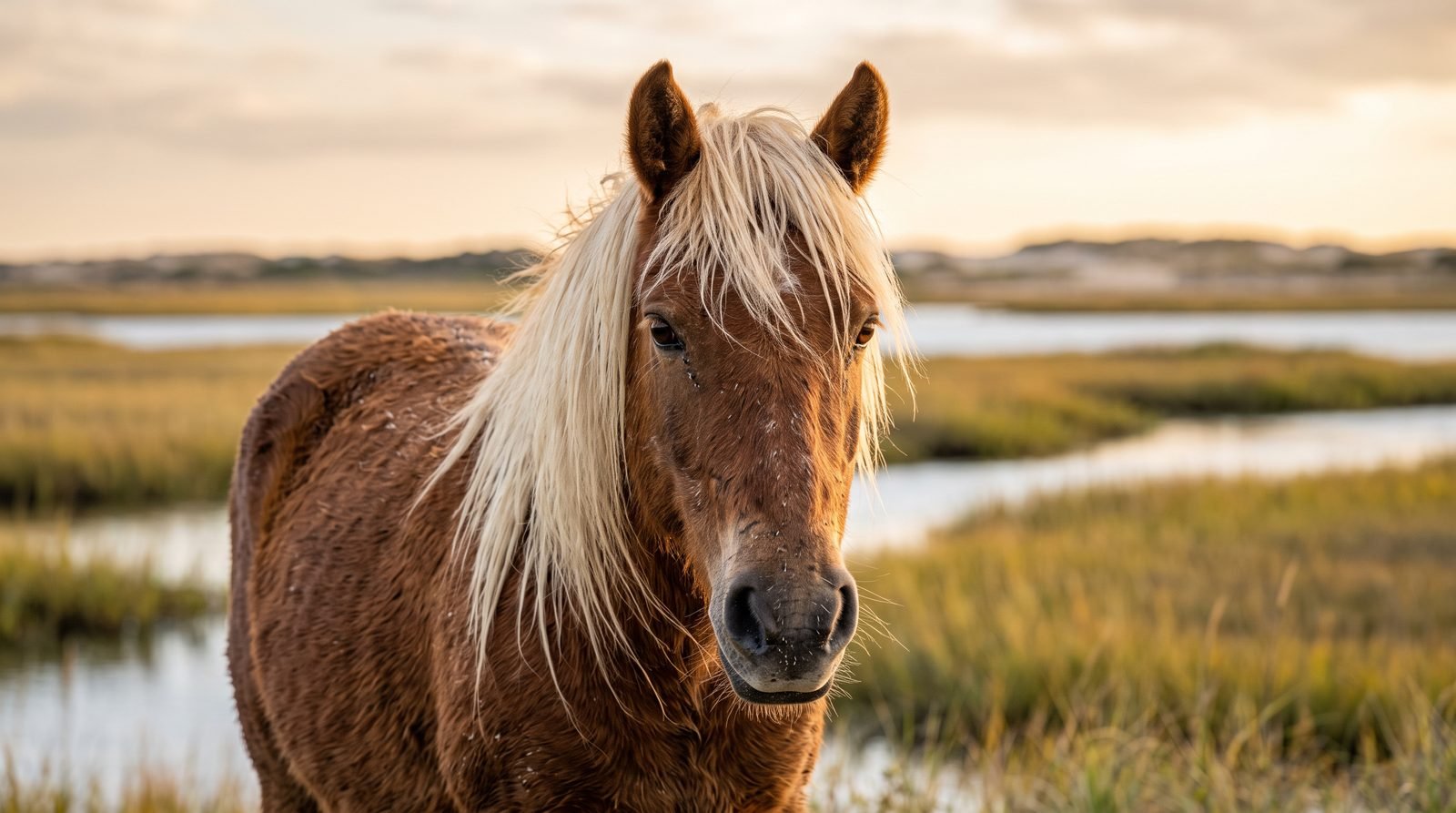
They're compact, hardy animals, and they're not quite like other horses: the breed carries an unusual number of vertebrae and ribs, along with a distinctive build, posture and coloring that sets it apart. Generations on a sandbar diet of salt-meadow grass did the rest — what survived out here was what could live on almost nothing.
The only mounted Boy Scout troop in America
Here's the detail worth retelling at dinner: in the late 1950s, the ponies were cared for by Ocracoke's Boy Scout troop — the only mounted Boy Scout troop in the country. Island boys broke and rode their own ponies, and the troop looked after the herd in the years before the federal government took the job over. There are islanders alive today who rode with it.
Why they're penned
The herd's free-roaming days ended with the road. NC-12 was cut down the island in 1957, and loose ponies and highway traffic were never going to coexist — so in 1959 the ponies were moved into a soundside pen, built to protect them from the road and the island from overgrazing. The National Park Service has managed the herd ever since, and today's ponies — around fifteen — are the direct line of the hundreds that once had the run of the place.
Make it a stop
The pen sits right on the route between the Hatteras ferry landing and the village, so if you're driving, it's the natural leg-stretch — pair it with the beach and the rest of the island. Coming without a car, it's a longer ride: about seven miles from the village by bike, beyond the tram loop, so most car-free visitors save the ponies for a return trip. Either way, every trip here starts with a ferry.
See the island the ponies got here first on
Blackbeard's Gold: The Crossing is a self-guided treasure hunt across Ocracoke — the ferry, the village trail, and the water where Blackbeard died. The ponies aren't in the case file. The island they've watched for three hundred years is. $29 per team.
Start the Hunt — $29 per team See the four versions$29 per team, not per person. Your team link arrives by email straight after checkout. Nothing to install.
Common questions
- Is it free to see the Ocracoke ponies?
- Yes. The pony pen on NC-12, about seven miles north of the village, is free and open year-round, with a parking pull-off and an observation platform. Donations are welcomed and help pay for the herd's feed and veterinary care.
- Can you touch or feed the Ocracoke ponies?
- No. The ponies are not tame — they can bite and kick — and feeding them is prohibited. Watch from the platform and keep hands on your side of the fence.
- How many Ocracoke ponies are there?
- Around fifteen, per the National Park Service, down from an estimated several hundred that once roamed the island freely. The Park Service rotates ponies up to the front pasture so visitors can always see some of the herd.
- Are the Ocracoke ponies really wild?
- They're the descendants of a herd that lived wild on the island for centuries, but they've been penned and cared for by the National Park Service since 1959, when NC-12 was built. Semi-wild is the honest word: wild stock, managed lives.
- When is the best time to see the ponies?
- Any day, any season — the herd is viewable year-round and there are no gates or hours to plan around. It makes an easy stop on the drive between the Hatteras ferry landing and the village.